

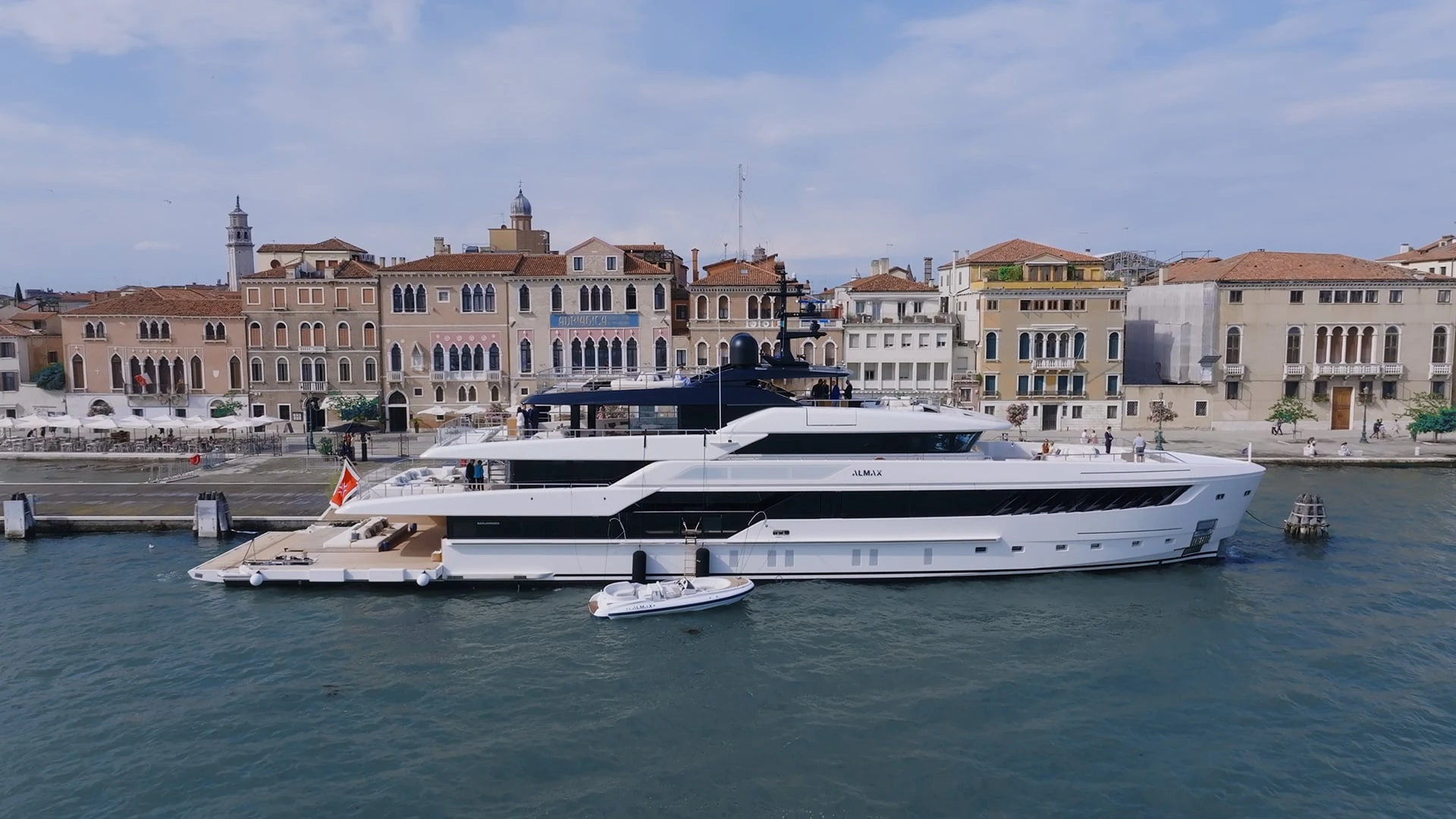
Approved articles for this Sanlorenzo issue.

Sanlorenzo's story begins inland, beside the Arno, rather than with a superyacht at a Mediterranean quay. In 1958, shipwrights Gianfranco Cecchi and Giuliano Pecchia established the business at Limite sull'Arno, bringing the traditions of a boatbuilding community into a company that would eventually become known for highly individual yachts.
The move towards the coast placed the young business within the working world of Viareggio. Its early approach was to build a limited number of boats around the requirements of individual owners. That idea—personalisation within a recognisable design language—would remain important as the materials, dimensions and organisation changed.
Giovanni Jannetti's leadership during the following decades helped shape the modern identity. The boats became larger and the business developed a more structured commercial approach while retaining an emphasis on detail and the owner's preferences. Sanlorenzo was building a reputation for a particular way of making a yacht feel considered rather than simply conspicuous.
The arrival of the fibreglass SL57 in 1985 was an important material step. Composite construction opened different possibilities from the wooden boats of the earlier period, influencing production and the development of larger accommodation. The SL100 followed in 1995, taking the range into the 100-foot class.
A move to Ameglia in 1999 gave the company another setting, within the landscape of the Montemarcello-Magra area. The geography of the business would continue to expand, but that site remains part of its identity. Yacht building is both an international market and a local activity, dependent on the facilities and skills available in particular places.
Massimo Perotti acquired a majority interest in 2005 and led a further phase of development. New models, facilities and markets extended the business, while the product language continued to place the owner at the centre. The challenge was to grow the organisation without making the yachts feel like interchangeable products.
The range now offers several different interpretations of time at sea. SL, SD, SX and SP identify distinct families within the yacht portfolio, while larger superyacht lines include Alloy, Steel, Explorer and X-Space. These are not merely different lengths of the same proposition. They explore different relationships between pace, range, accommodation and outdoor living.
The SX approach, for example, has brought a strong emphasis on open space and the connection with the water. The SP family explores a more performance-oriented direction. At superyacht scale, the 50Steel turns attention towards the arrangement of decks and the systems that support life at anchor. A shared brand can therefore contain several architectural ideas.
Design collaborations are central to that variety. Piero Lissoni and Zuccon International Project appear across important projects, alongside specialist contributors in naval architecture and product development. Their work gives the company access to different creative disciplines while the yard retains the responsibility for making the whole vessel function.
The wider Sanlorenzo Group also includes Bluegame and Nautor Swan. Those names have their own identities and products; they help describe the breadth of the group without changing what makes a Sanlorenzo yacht distinct. Understanding the difference between the group and the individual brand is useful when following its contemporary story.
The business became publicly listed in 2019, adding another chapter to a journey that began with two shipwrights. Yet the most interesting continuity is still found in the relationship between a plan and an owner. A room, a route through the yacht or the way a terrace opens can carry as much personality as the exterior profile.
That is why architecture is a helpful way to read Sanlorenzo. The yacht is not simply a vehicle with rooms placed inside it. It is a sequence of spaces, views and daily routines, supported by a substantial technical platform. The company's best-known work makes those relationships part of the design itself.
About The yard that treats a yacht as architecture
Enquiries are not enabled yet. No message will be sent.
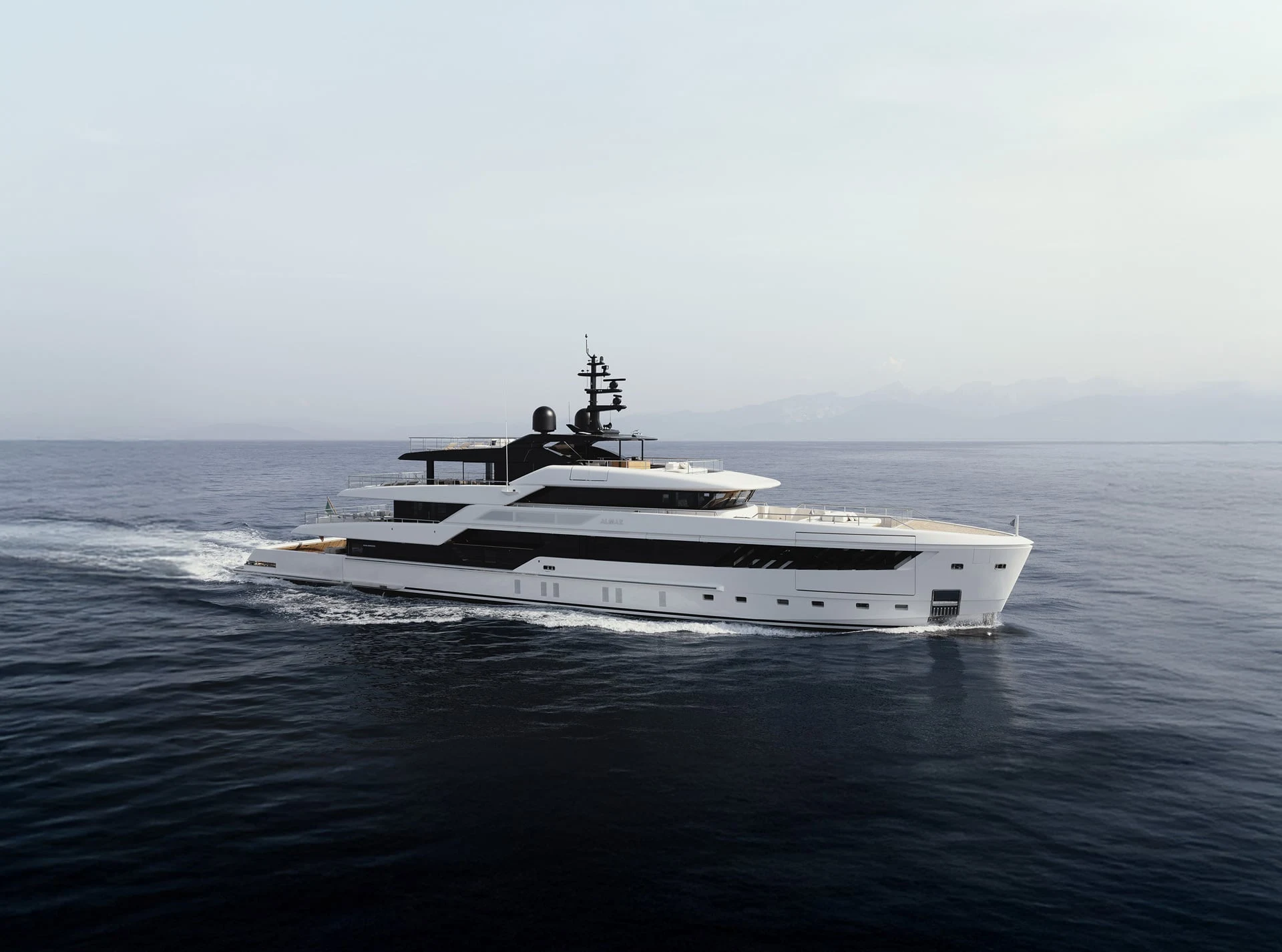
The 50Steel's most interesting innovation is not immediately obvious from the quay. Its exterior presents a composed, coherent superyacht, while the arrangement within departs from the familiar stack of matching decks. Five offset levels create a more varied interior architecture, changing how rooms connect and how the yacht's volume is experienced.
At 50 metres, with a beam of 9.30 metres and a gross tonnage of 499, the model works within the sub-500GT category. The design challenge is to make those dimensions feel generous through organisation rather than simply adding length. Space becomes something to arrange intelligently, not only something to measure.
Zuccon International Project is responsible for the exterior lines. Their role is to hold the different levels within a profile that still reads clearly as one yacht. A complex internal arrangement can easily announce itself as a restless exterior; here the interest lies in keeping the overall form controlled while the rooms enjoy a less conventional relationship.
Piero Lissoni designed the first yacht's interior. His approach treats the accommodation as a series of architectural spaces, with connections and changes in level that allow views to open through the vessel. The result is a different kind of generosity from a single oversized room: several areas can relate to one another without becoming one undifferentiated hall.
The beach club extends the same interest towards the water. Opening sides create a broad outdoor edge, and the arrangement of technical spaces allows areas traditionally associated with machinery to contribute to the living experience. The relationship between the hidden working yacht and the visible accommodation is being reconsidered rather than simply concealed.
That is a substantial design decision. Machinery arrangements influence what can happen above and around them, while guest circulation affects the ways people encounter the boat. Moving one element can release a possibility elsewhere, but it also requires the engineering, structure and service routes to be resolved together.
The 50Steel also introduces a green-methanol reformer fuel-cell installation developed with Siemens Energy. The system reforms methanol to produce hydrogen, then generates electrical power for hotel loads. Its published capacity is up to 100kW, aimed at supporting the services used while the yacht is at anchor without running the main engines or diesel generators for that purpose.
Hotel loads are the everyday electrical demands of living aboard, distinct from driving the yacht through the water. Lighting, air conditioning and other services remain important even when the vessel is stationary. Addressing those demands is therefore a meaningful part of the operating picture, alongside propulsion and the design of the hull.
The significance is the integration of a new technical approach into a complete yacht. It involves equipment, storage, safety arrangements and the space required to operate and maintain the installation. The visible comfort of a room depends on systems that most guests will never need to inspect, but which have helped determine how that room can exist.
The model accommodates ten guests and nine crew, with the separate needs of those groups incorporated into the plan. A yacht's generous guest spaces require an equally considered working organisation. Food, laundry, maintenance and movement through the boat continue around the leisure programme, even when the intention is for that work to remain unobtrusive.
The second 50Steel was launched at La Spezia in February 2026, with interiors by Sanlorenzo's own Style Department. That progression is revealing: the architectural platform can support a different interior response rather than requiring every yacht to reproduce the first one. Individuality remains part of the series.
The 50Steel brings together two developments that are often discussed separately: how a yacht feels to inhabit and how its systems support that experience. Its appeal lies in the connection. A different engineering arrangement can create a different room; a new room can change the way people spend their time aboard. The innovation becomes most persuasive when it improves the whole pattern of life afloat.
About 50Steel: another way to arrange life afloat
Enquiries are not enabled yet. No message will be sent.
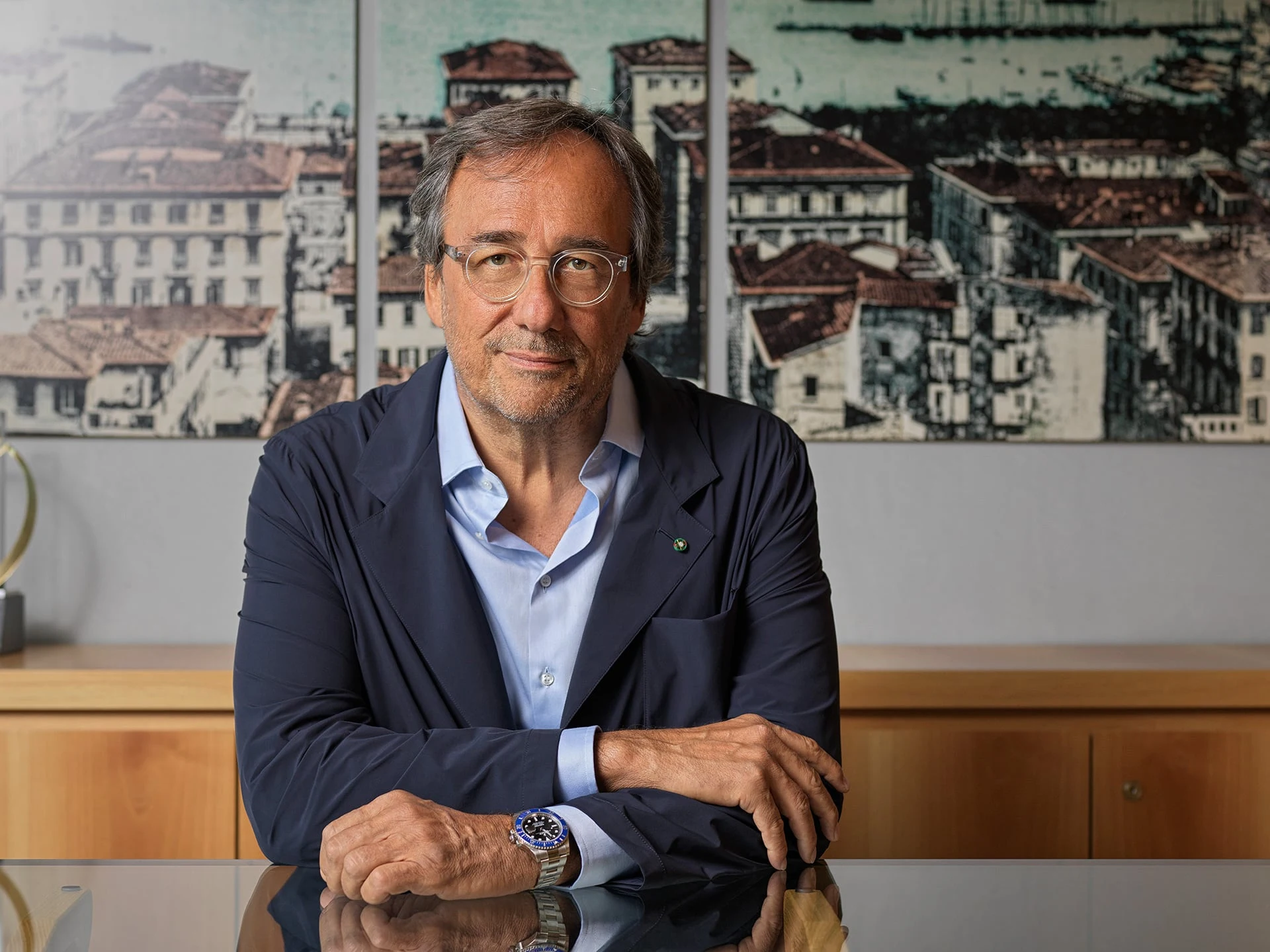
The public image of a yacht builder often centres on a chairman, a designer and a launch photograph. Sanlorenzo's working organisation is considerably broader. Corporate leadership, research, purchasing, information systems and the crafts of the yard all contribute to whether a design can become a convincing vessel.
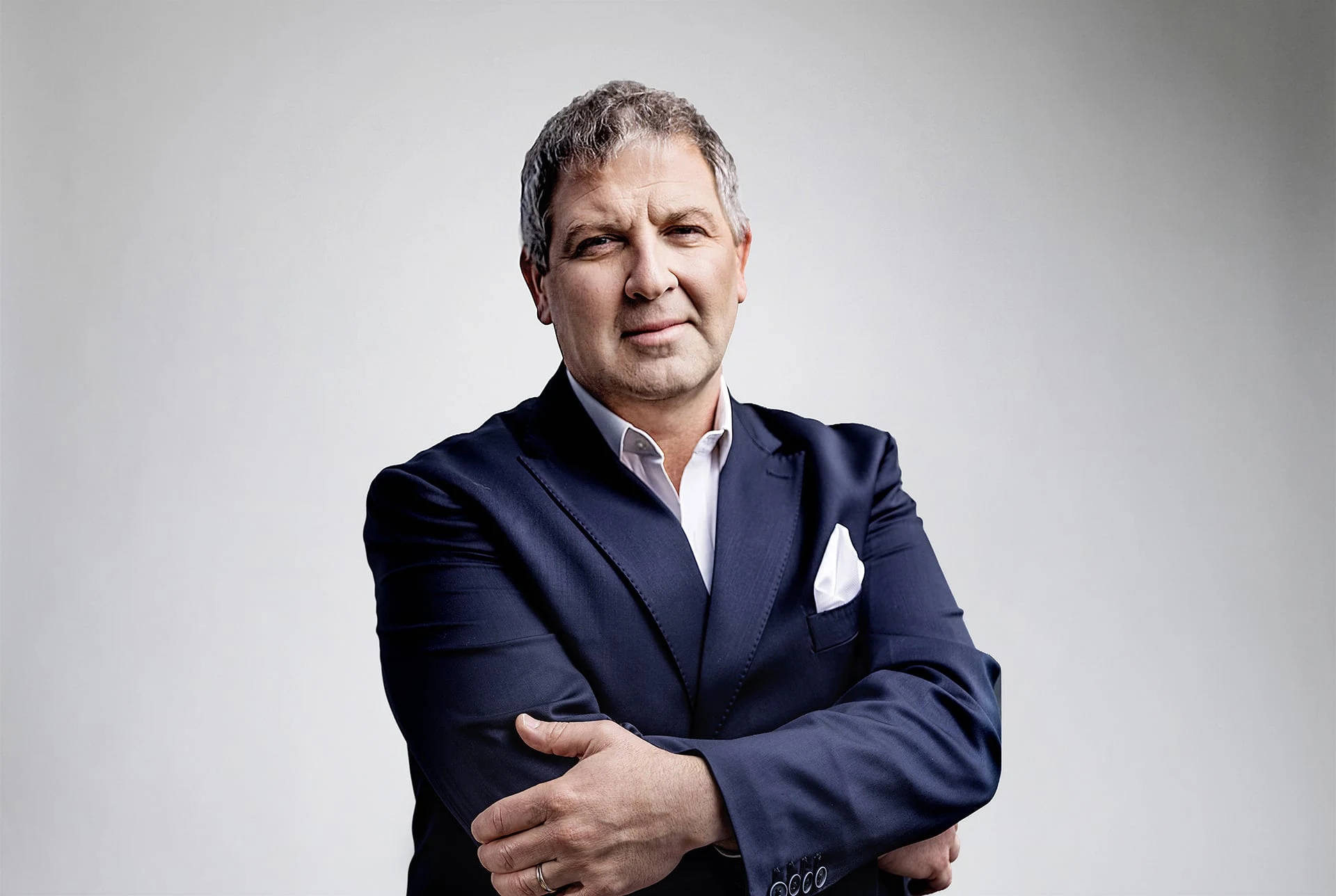
Massimo Perotti has led the group's modern development since acquiring a majority interest in 2005. Working within the leadership alongside him, Tommaso Vincenzi brings a background in engineering and product development, connecting the technical evolution of the yachts with the organisation that delivers them.
The wider team makes the range of responsibilities visible. Pier Francesco Acquaviva is Chief Corporate Officer and Attilio Bruzzese is Group Chief Financial Officer. Their disciplines concern the organisation that stands behind the projects: its structure, resources and capacity to support a long, complex construction programme.
Elena Cortesi is Group Chief Information Officer. Information systems may seem remote from the atmosphere of a finished saloon, but a modern builder depends on accurate data moving between functions. Drawings, procurement, production and administration all need reliable ways to communicate as a yacht develops from a proposal into thousands of coordinated components.
Simone Bruckner leads research and development, while Damiano Patelli is Chief Procurement Officer. These roles meet around a practical question: how a new idea can be translated into equipment, materials and work that can be delivered. A design decision is only the beginning of the process; the builder has to understand its consequences across the project.
Vincenzo Soria is Chief Sales Officer, Renato Bisignani leads group marketing and communications, and Cesare Perotti works on corporate integration and strategic projects. Together these functions connect the product, the market and the continuing development of the wider business. They help explain why yacht building requires more than the capability to construct a hull.
Outside design specialists add their own expertise. On the SP110, the named collaboration brought together Bernardo Zuccon for the exterior, Piero Lissoni for the interior, Marco Arnaboldi for the hull and Tilli Antonelli in product development. Each had a different part of the same problem to solve: create a performance-oriented yacht whose systems and spaces made sense together.
The hull and propulsion choices on that project were closely linked. Arnaboldi's work was developed around waterjet propulsion, while the three-engine arrangement introduced flexibility in how power could be used. The point is not that one discipline can dictate the result alone, but that the combination has to be considered as a whole.
The company's Academy addresses another part of the people story. Established in 2018, it offers a 600-hour programme combining classroom work, workshops and practical experience. The aim is to help young people develop technical and workplace skills for careers within the group, making training part of the builder's future capability.
Nautical Days gives selected students a shorter introduction to the working environment. Across two days at the yards, participants meet people and encounter the practical challenges behind the finished yachts. For an industry whose most visible images show leisure, opening the workshop world is an important way to make its careers understandable.
The craft contribution remains essential. Joinery, installation, finishing and the many specialist trades have to carry the design intention into the details people actually touch. A yacht's coherent atmosphere is built through repeated decisions at that scale, supported by the less visible work of engineering, purchasing and organisation.
Seen together, these people form a much richer picture than a single signature on a design. Sanlorenzo's architectural ambitions depend on a network of responsibilities, from a future apprentice's first workshop experience to the leadership of a major project. The yacht is the visible result; the company behind it is a continuing exchange of skills.
About A company made of different kinds of expertise
Enquiries are not enabled yet. No message will be sent.
Use the company’s official website for business enquiries about this article.
Contact Sanlorenzo on its official website ↗
Sanlorenzo S.p.A., Via Armezzone 3, 19031 Ameglia (SP), Italy | +39 0187 6181
La Spezia: Viale San Bartolomeo 362, 19126 La Spezia | +39 0187 545700
Viareggio: Via Luigi Salvatori 56/58, 55049 Viareggio | +39 0584 38071
Massa: Via Dorsale 13, 54100 Massa | +39 0187 6181
Image credit: Sanlorenzo 50Steel. Sanlorenzo. Original image and credit . Image may be cropped for the layout.