

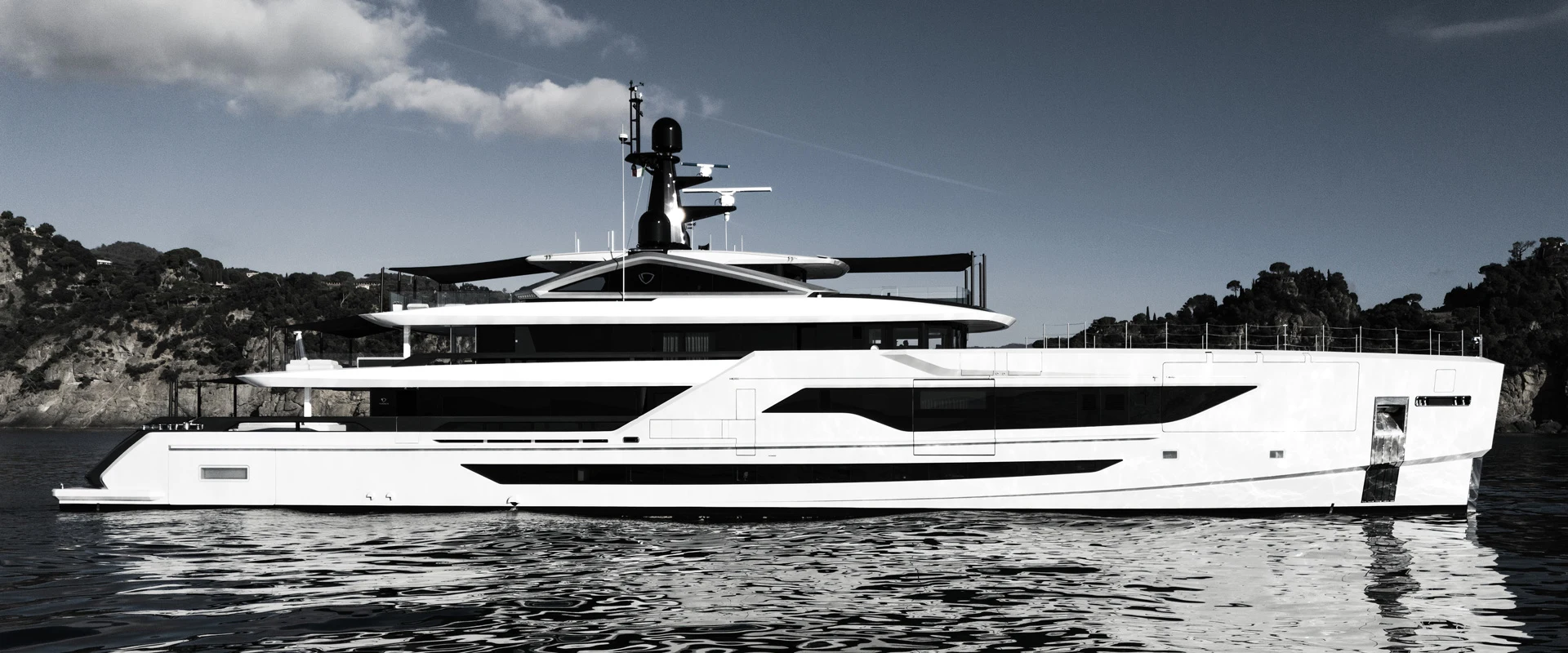
Approved articles for this Tankoa Yachts issue.
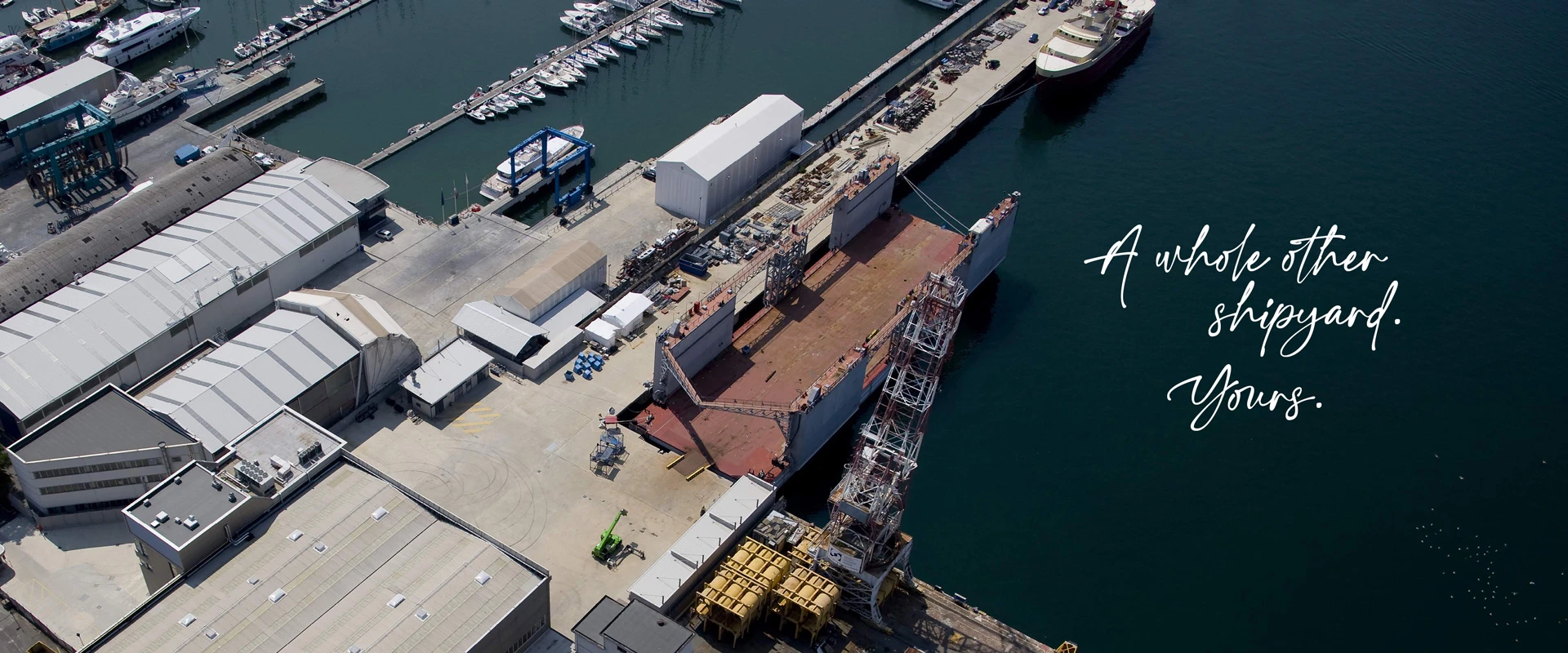
In Genoa, yacht building sits within a much older working waterfront. Commercial ships, engineering businesses and specialist trades form the background to Tankoa's approach: a relatively small number of large, highly individual yachts, developed around the people who will own them. The scale is industrial; the ambition is personal.
Tankoa emerged in 2008 with the backing of the Orsi family. Its identity draws on Genoa itself: the name refers to a scorpion in the local dialect. The connection is more than a picturesque detail. This is a builder whose story belongs to the city's maritime economy, where access to skilled people and an established culture of ship construction are practical assets.
The yard concentrates on custom yachts from 45 metres upwards. That places it in a part of the market where an owner is choosing far more than finishes. Interior circulation, the relationship between guest areas and working spaces, the arrangement of outdoor decks and the way the yacht will be used all become important parts of the brief.
Tankoa's Genoa headquarters occupies approximately 30,000 square metres. A second production hub of a similar area in Civitavecchia extends the working geography beyond Liguria. Carpentry and pre-fitting are among the activities associated with that additional space. Those words sound modest beside a completed superyacht, yet they describe the work from which the finished experience is made.
Pre-fitting brings construction decisions forward. Equipment, structures and the spaces around them have to be considered before access becomes restricted by later stages of the build. Carpentry, meanwhile, has to reconcile the appearance of the interior with the realities of life afloat: movement, weight, maintenance and the routes taken by guests and crew.
The distinction between a production platform and a custom yacht is useful here. A platform can provide an established basis for dimensions, engineering and arrangement. The owner's particular requirements then shape the individual project. Tankoa's fleet shows how different those outcomes can become, even within the broad family resemblance of a builder's work.
Suerte is an early statement of that approach. At 69.30 metres, she brings together an unusually varied sequence of spaces, including an aquarium separating dining and family areas, a panoramic upper-deck saloon and extensive outdoor accommodation. Her scale allowed the yacht to become a setting for several different ways of spending time at sea.
At the other end of the size range, the 45-metre T450 demonstrates the challenge of doing more within a smaller envelope. Designed by Cassetta, it combines a steel hull and aluminium superstructure with a main saloon offering a wide view of the water. The project is not simply a reduced version of a larger yacht; its proportions and circulation have to earn their place.
Between those points sit projects such as the 49.90-metre Bintador and the 58-metre Diamond Binta. One foregrounds hybrid propulsion and a natural-material interior. The other makes a remarkable feature of the route between guest accommodation, the engine room and the beach club. Each gives a different answer to the same question: what should this particular yacht enable its owner to do?
That question changes the meaning of luxury. It can be expressed in a piece of stone or a carefully detailed cabinet, but also in an easy route from a cabin to the water, a quiet anchorage or a room that works equally well for a family breakfast and a formal evening. The most successful decisions are often felt before they are noticed.
Tankoa's combination of a boutique identity and substantial working facilities makes this tension central to the business. There must be enough engineering discipline to deliver a complex vessel, yet enough flexibility to preserve the owner's priorities. The yard, designers and specialist trades meet at that point.
The result is a fleet that rewards a closer look. Beyond the silhouettes are stories about layout, materials, propulsion and the people who brought them together. For Tankoa, the interesting measure is not how many yachts can share a name, but how differently a yacht can express the person behind the commission.
About Genoa's boutique approach to the superyacht
Enquiries are not enabled yet. No message will be sent.

Some yachts announce their character in profile. Others reveal it in the route from a cabin to the beach club, the materials underfoot or the machinery that changes the sound of a passage. Bintador, Diamond Binta and Suerte offer three particularly revealing ways into Tankoa's work.
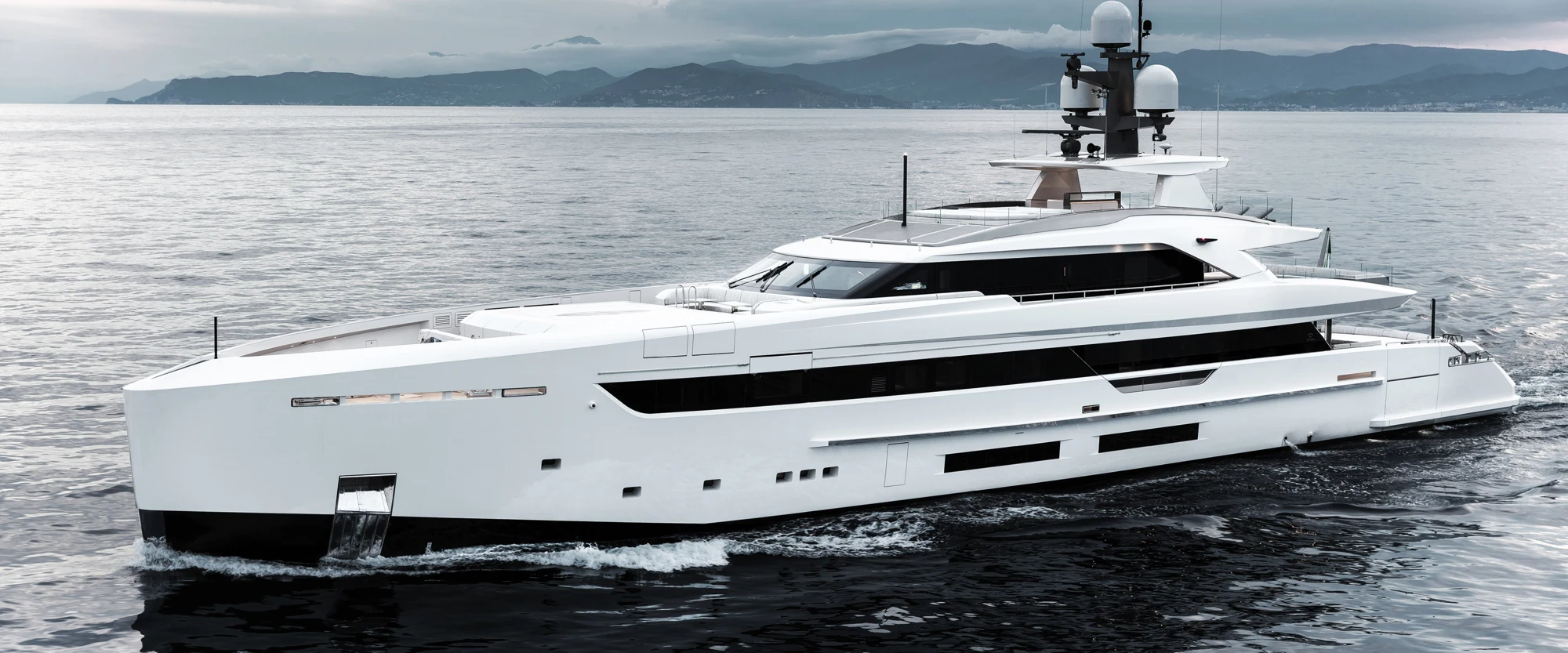
Bintador belongs to the builder's 50-metre family, with an overall length of 49.90 metres and a beam of 9.40 metres. Her aluminium hull and superstructure contain 499 gross tons. Those figures describe the framework; the hybrid propulsion package explains much of the yacht's particular interest.
A hybrid installation allows the propulsion and electrical systems to be considered together rather than as entirely separate subjects. The arrangement on Bintador was a significant step for Tankoa's 50-metre platform. For those on board, the appeal reaches beyond engineering novelty to the atmosphere of cruising: how the yacht moves, how her systems are used and how the machinery relates to the living spaces.
Her interior was developed by Francesco Paszkowski with Margherita Casprini. Oak, marble, glass, leather and fabrics create a palette grounded in natural materials. That choice brings warmth to a technically ambitious yacht, giving the accommodation a more domestic language than a collection of conspicuous luxury surfaces might suggest.
The owner's suite has an office and lounge, with a folding terrace to starboard and a large opening window to port. Elsewhere, an upper-deck dining area connects with the sky lounge, while the forward deck provides another place to sit outside. The arrangement offers alternatives: sociable spaces, private retreats and different relationships with the view.
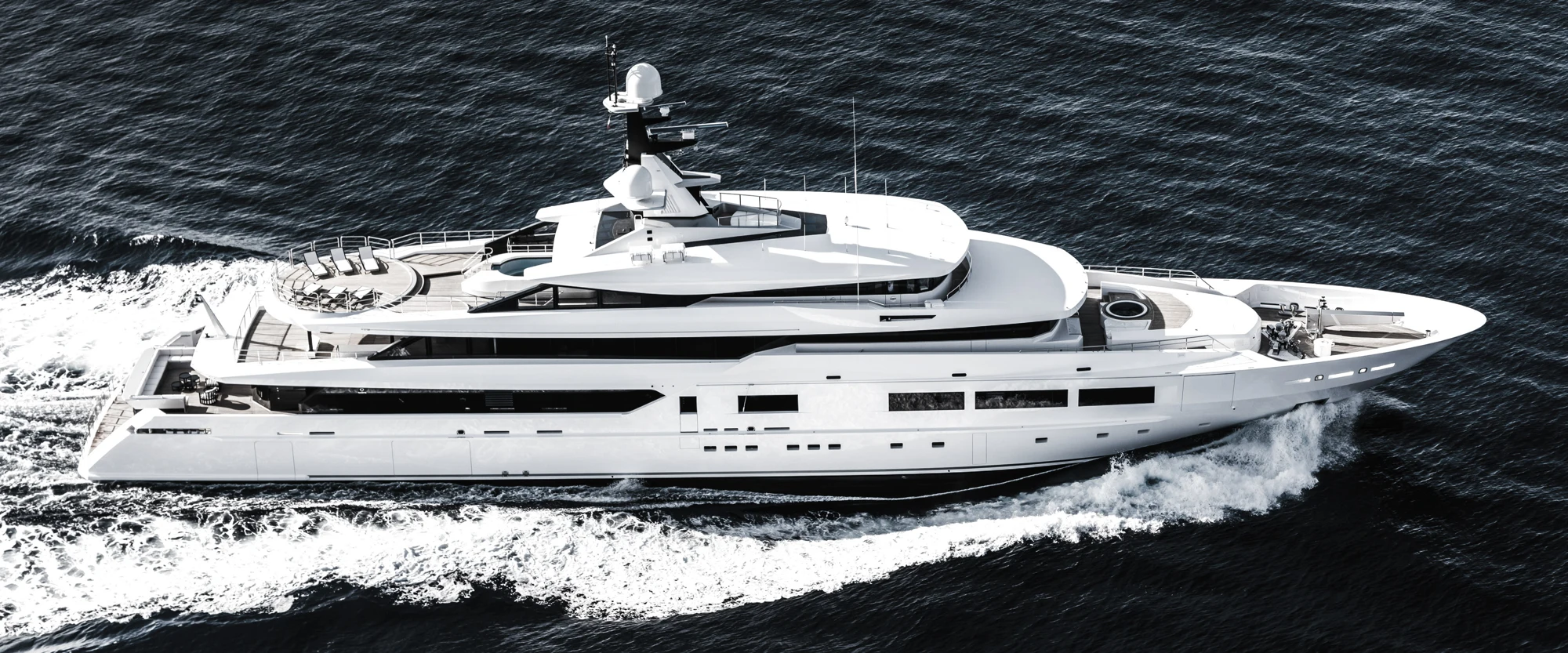
Diamond Binta takes the story in another direction. At 58 metres, with a 10-metre beam and 1,013 gross tons, she has the volume to make a distinctive architectural move. A panoramic lower-deck corridor connects the guest accommodation with the beach area, passing through an open engine room. Machinery becomes part of the owner's experience rather than something concealed entirely below the domestic world.
That route is a telling expression of a personal brief. For someone interested in engineering, a yacht's technical heart can be as compelling as its saloon. Making it part of a guest route requires the design to address the transition between working and living environments. It changes the story a visitor encounters while moving through the vessel.
The beach club continues that interest in opening up space. Fold-down sides admit more light and expand the relationship with the water. A spa and massage room give the area a purpose beyond storing equipment or providing access to a tender. The master suite and five guest cabins are connected to a yacht whose lower levels are actively used.
Paszkowski's exterior lines and Casprini's interior design give Diamond Binta a clear creative partnership. Wood, leather, metal and glass sit alongside furniture made specifically for the yacht. Custom work here is not confined to one showpiece: it extends to living-room tables, the owner's office desk and the practical surfaces of the galley.
Suerte presents a larger canvas. Her 69.30-metre length and 11.30-metre beam support a sequence of spaces that includes a family television room, dining separated by an aquarium and an upper-deck panoramic saloon. A crow's nest adds another perspective, reached by a concealed lift, while large tenders and outdoor areas support a varied life beyond the interior.
Paszkowski and Casprini also collaborated on Suerte, working with a material palette that includes satin-finished teak, slate, Jerusalem stone, silk and leather. Across these three yachts, their names connect very different briefs. The continuity lies in the design collaboration, not in imposing one identical room or arrangement on every owner.
Together the yachts show how much is contained in the word custom. It can mean a propulsion decision, a route through an engine room or the atmosphere created by a particular material. The pleasure of studying Tankoa's fleet is discovering those differences—and seeing how a large vessel can become a very individual place.
About Three yachts, three ways to live at sea
Enquiries are not enabled yet. No message will be sent.
A finished yacht carries a single name on her stern, but the thinking behind her is shared among many people. At Tankoa, the owner, the yard's technical teams and outside designers meet around a brief that has to work as architecture, engineering and a place to live. The collaborations reveal as much about the builder as the exterior photographs.
Francesco Paszkowski is a recurring presence in the fleet. His exterior work gives projects such as Suerte and Diamond Binta their particular proportions and lines. Those decisions establish the yacht's public character, but they also influence the size, shape and relationship of the spaces within. An exterior is therefore part of the arrangement, not a decorative wrapper added afterwards.
Margherita Casprini's interior work brings another scale of attention. In Bintador and Diamond Binta, materials, furniture and the character of the rooms shape the experience of occupying the yacht. A long exterior line is understood at a distance; a handrail, a table edge or the way daylight reaches a seating area is encountered at arm's length.
Their collaboration on Suerte extends across an interior with stone, timber, silk and leather. These materials have different textures and respond differently to light. Bringing them together requires restraint as well as variety, particularly in a yacht where the sea and sky continually change the colour of the view beyond the windows.
Cassetta's T450 introduces a different design voice. The 45-metre model is Tankoa's first below 50 metres, and its character depends on balancing interior and exterior space within that more compact length. The broad view from the main saloon and the attention to lighting are especially important when the ambition is to make the yacht feel generous without relying on sheer size.
For the 70-metre T700 Milano, Tankoa has worked with Nauta Design. Here the design language emphasises horizontal lines and a strong connection with the sea. The model's 145-square-metre beach club makes the outdoor edge of the yacht a major living area, while an engine-room arrangement on the under-lower deck creates another distinctive route through the vessel.
The T700 is a model proposal, a place to explore an approach to a future commission. Its clean volumes and layered decks show the kind of conversation a design studio can open with an owner: where to gather, where to retreat and how the interior should connect with life outside. Those questions precede the selection of individual finishes.
The T560 Apache explores another arrangement. Guest cabins move to the main deck, while the lower deck accommodates a gym and spa facilities. At the aft end, a lounge connects with a beach bar and pool. It is an example of how changing the position of a familiar room can alter the pattern of the whole yacht.
Inside the yard, those ideas must become coordinated work. A deck opening affects structure, drainage and the areas below it. A bespoke item of furniture needs an installation route and a secure fixing. A guest space must coexist with the services required to keep it comfortable. Engineering turns the attractive possibility into a buildable arrangement.
The craftsmen then make that arrangement tangible. Carpentry and pre-fitting, supported by Tankoa's Genoa and Civitavecchia facilities, translate drawings into components and working spaces. Their contribution may be measured in joints, clearances and surfaces, but its effect is felt throughout the completed yacht. The apparently effortless detail usually represents a sequence of carefully resolved decisions.
Owners are participants in this process too. Diamond Binta's engine-room corridor is a particularly vivid example of a personal interest shaping the design. A successful collaboration makes room for such preferences while retaining the judgement needed to create a coherent vessel. The result should feel intentional from the largest volume to the smallest practical detail.
That is what gives Tankoa's design partnerships their editorial interest. There is no single formula shared by every yacht. Instead there is a continuing exchange between distinct creative voices, technical disciplines and individual briefs. The finished lines are the visible record of that conversation.
About The designers and disciplines behind the lines
Enquiries are not enabled yet. No message will be sent.
Use the company’s official website for business enquiries about this article.
Contact Tankoa Yachts on its official website ↗
Tankoa Yachts S.p.A., Via Cibrario 1H, 16154 Genova, Italy | +39 010 8991100 | Fax +39 010 8991118
Image credit: Diamond Binta, Tankoa’s 58-metre yacht. Tankoa Yachts. Original image and credit . Image may be cropped for the layout.