
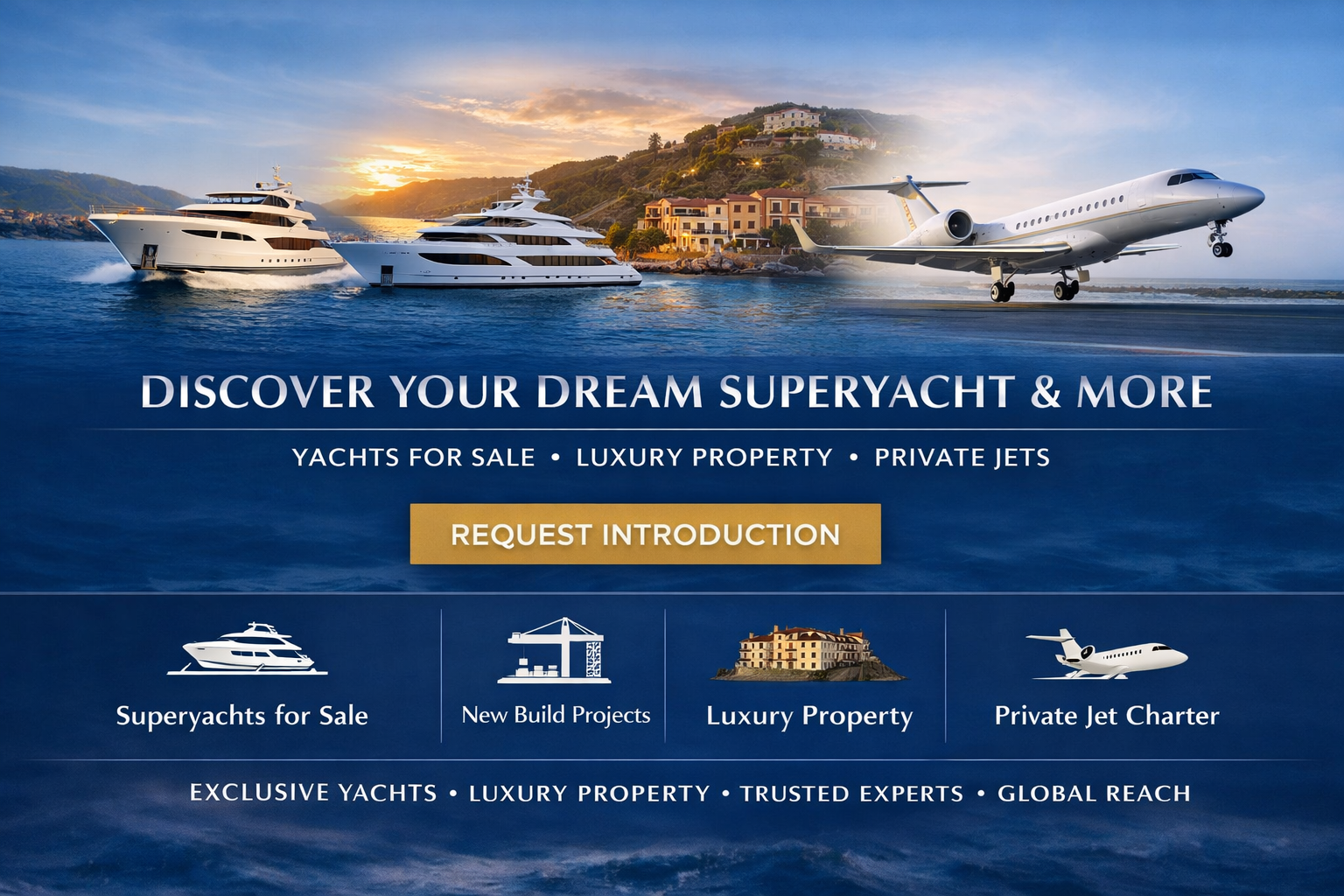
Explore a curated world of exceptional assets, from superyachts for sale and charter to luxury property and private jets. Whether you are looking to acquire, invest, or experience, we connect you with trusted opportunities and industry-leading expertise tailored to your requirements.
Luxury Property
Luxury property represents one of the most enduring forms of wealth, lifestyle and investment. Around the world, high-end residential real estate continues to attract investors, entrepreneurs and individuals seeking exceptional living environments in some of the most desirable locations on earth.
Luxury properties range from waterfront villas and penthouses in major global cities to exclusive estates located in private coastal or mountain settings. These properties are defined not only by their location and design but also by the quality of architecture, craftsmanship and lifestyle they offer.
In our view, luxury property has evolved beyond simply owning an impressive home. It is now closely connected with lifestyle, privacy, international mobility and long-term investment strategy.
What defines a luxury property
A luxury property is typically characterised by its location, architectural design, size and the quality of materials used in its construction. Prime locations such as coastal areas, major global cities and prestigious residential districts often command the highest property values.
Luxury homes are also defined by the level of design and attention to detail incorporated into the property. Interiors may include bespoke finishes, advanced home automation systems and carefully designed outdoor living spaces.
Many luxury homes are designed to provide both comfort and privacy while offering exceptional views or access to unique natural environments.
Global luxury property markets
The luxury property market operates on a global scale. Major cities such as London, New York, Dubai and Monaco are recognised as international centres for high-value real estate.
At the same time, coastal regions in the Mediterranean, Caribbean and other desirable locations continue to attract buyers seeking lifestyle properties.
These markets are influenced by global economic trends, investment demand and international mobility.
Luxury property as an investment
Many buyers view luxury property not only as a residence but also as a long-term investment asset. Prime real estate in desirable locations often retains value over time and may benefit from capital appreciation.
Investors may also generate rental income from luxury properties located in popular destinations.
Those exploring property as an investment opportunity may wish to review our Luxury Property Investment Guide.
Architectural design and lifestyle
Architecture plays an important role in defining luxury property. Many high-end homes are designed by internationally recognised architects who focus on creating spaces that combine visual impact with practical living environments.
Modern luxury homes often include open-plan living areas, expansive terraces, wellness facilities and outdoor entertainment spaces.
Design elements are frequently chosen to maximise natural light, views and the relationship between interior and exterior living areas.
Technology in luxury homes
Technology has become an integral part of modern luxury property. Smart home systems allow residents to control lighting, climate, security and entertainment systems through digital interfaces.
Advanced security systems, integrated audio-visual technology and energy management systems are now common features in many high-end homes.
These technologies improve both comfort and convenience while enhancing the overall living experience.
Exclusive developments
Many luxury properties are located within exclusive residential developments that provide additional privacy and services for residents.
These developments may include private security, concierge services, leisure facilities and managed landscaping.
Some developments also offer access to private marinas, golf courses or beach clubs.
More information on these types of developments can be found in our section on Exclusive Developments.
Buying luxury property
Purchasing a luxury property often involves working with specialist real estate agents who operate within the high-end market. These professionals understand the unique requirements of luxury buyers and have access to exclusive listings.
Transactions may involve complex legal and financial considerations, particularly when properties are purchased internationally.
For a detailed explanation of the purchasing process, see our Luxury Property Buying Guide.
Market trends
The luxury property market is influenced by a range of global trends including economic conditions, international investment flows and lifestyle changes.
Demand for larger properties, private outdoor space and access to lifestyle amenities has increased in recent years.
Many buyers are also seeking properties that support flexible living arrangements and remote working.
Our section on Property Market Trends explores these developments in more detail.
Sustainability in luxury real estate
Sustainability is becoming an increasingly important factor within luxury property development. Modern high-end homes often incorporate energy-efficient technologies, renewable energy systems and environmentally responsible materials.
These features help reduce environmental impact while maintaining the high standards expected in luxury real estate.
Further insights can be found in our section on Sustainable Luxury Property.
Final thoughts
Luxury property remains one of the most prestigious and valuable asset classes within the global real estate market. Whether purchased as a primary residence, holiday home or investment opportunity, these properties offer a unique combination of lifestyle and financial value.
As international travel and global investment continue to expand, luxury real estate is likely to remain a central part of the broader luxury industry.
For buyers and investors alike, understanding the dynamics of the luxury property market is essential when exploring opportunities within this exclusive sector.


Recognition is not requested — it is earned. We identify and present exceptional companies operating at the highest level across superyachts, property, and private aviation. If your business meets the standard, inclusion places you alongside a trusted, carefully curated network recognised by a global audience.
Learn More..
Superyachts for Charter Guide | Luxury Charter Explained
Luxury Property for Sale in Spain | Investment & Lifestyle Guide
Superyachts for Sale Guide | Ownership, Costs & New Build Options
Superyacht Companies | Builders, Brokers & Superyachts for Sale
What Is Included on a Superyacht | Features, Amenities & Value
Average Cost of Owning a Superyacht | Running Costs & Value
Yacht vs Superyacht | Key Differences & Buying Guide
Motor Yachts vs Sailing Yachts | Key Differences & Buying Guide
Recognised Companies- Private Jets
Recognised Companies - Luxury Real Estate
Explore..
Luxury Property for Sale in Spain | Investment & Lifestyle Guide
How Long Does It Take to Build a Superyacht | New Build Timeline
How Many Crew Are Needed to Operate a Superyacht | Crew Guide
How Much Does It Cost to Build a Superyacht | New Build Pricing Guide
How Much Does It Cost to Charter a Superyacht | Charter Pricing Guide
How to Charter a Superyacht | Step-by-Step Charter Guide
Contact Introductions | Superyachts for Sale, Charter & Luxury Assets
Do Superyachts Make Money Through Charter | Investment & Returns Guide
Recognised Shipyards
Recognised Superyacht Charter Companies

Only the most exceptional companies are presented. We curate a select portfolio of superyachts, luxury property, and private aviation opportunities, ensuring every introduction reflects quality, credibility, and global appeal.
Recognition places your business among a trusted global network. If selected, you gain visibility to a high-value audience and alignment with a platform built on quality, discretion, and industry credibility.