

Explore a curated world of exceptional assets, from superyachts for sale and charter to luxury property and private jets. Whether you are looking to acquire, invest, or experience, we connect you with trusted opportunities and industry-leading expertise tailored to your requirements.
Property Market Trends
The global luxury property market is constantly evolving as economic conditions, international investment flows and lifestyle preferences change. Understanding these trends is essential for buyers, investors and developers who wish to identify opportunities within high-value real estate markets.
Luxury property markets operate on an international scale, with demand often driven by global wealth, mobility and the attractiveness of certain destinations. In our view, monitoring these trends helps buyers make more informed decisions when entering the market.
While property markets can vary significantly between regions, several consistent themes continue to shape the future of luxury real estate worldwide.
Global demand for prime real estate
Prime real estate located in internationally recognised cities and prestigious coastal destinations continues to attract strong global demand. Cities such as London, New York, Dubai and Monaco remain important centres for luxury property investment.
At the same time, lifestyle destinations including the Mediterranean, Caribbean and Alpine regions continue to appeal to buyers seeking second homes or holiday properties.
These destinations combine lifestyle appeal with strong long-term investment potential.
International buyers and cross-border investment
Luxury property markets are increasingly influenced by international buyers. Investors often seek property in stable economies with strong legal systems and reliable property ownership frameworks.
Cross-border investment has become a major factor in prime real estate markets, particularly in cities that function as global financial centres.
International buyers frequently view luxury property as a secure store of wealth as well as a lifestyle asset.
For a broader overview of the sector, see our introduction to Luxury Property.
The impact of lifestyle changes
Lifestyle preferences have a significant influence on property demand. In recent years many buyers have prioritised properties that offer greater space, outdoor living areas and access to natural environments.
Coastal properties, countryside estates and homes with extensive outdoor facilities have become increasingly popular.
The ability to work remotely has also influenced buying decisions, allowing individuals to consider locations that were previously less practical for daily living.
Growth of branded developments
Branded residential developments have become a growing segment of the luxury property market. These developments are often associated with well-known hospitality brands and offer a combination of residential living and hotel-style services.
Residents may benefit from concierge services, wellness facilities and hospitality management provided by the brand behind the development.
Many of these projects fall within the category of Exclusive Developments.
Limited supply in prime locations
One of the defining characteristics of luxury property markets is the limited availability of prime real estate. Coastal areas, historic districts and prestigious residential neighbourhoods often have limited space for new development.
This scarcity can contribute to long-term property value growth in these locations.
Buyers often compete for properties that offer exceptional views, waterfront access or unique architectural features.
The role of technology
Technology is also influencing how luxury property is marketed and sold. Digital property platforms, virtual tours and international marketing campaigns allow properties to reach global audiences more easily.
Buyers can now explore properties remotely before travelling to view them in person.
This increased accessibility has helped expand the international reach of luxury real estate markets.
Sustainability and energy efficiency
Sustainability is becoming a key consideration for many property buyers. Energy-efficient homes, renewable energy systems and environmentally responsible construction methods are increasingly valued within the luxury market.
Modern developments often incorporate smart energy management systems and sustainable building materials.
These trends are explored further in our section on Sustainable Luxury Property.
Investment strategies in luxury property
Investors often analyse market trends carefully when selecting property opportunities. Factors such as economic stability, infrastructure development and international connectivity can influence long-term property values.
Properties located in destinations with strong tourism demand may also generate rental income opportunities.
These investment considerations are discussed in our Luxury Property Investment Guide.
The influence of global wealth
The growth of global wealth continues to influence luxury property markets. As new wealth emerges in different regions of the world, buyers increasingly look for international investment opportunities.
Major financial centres and lifestyle destinations often benefit from this global capital movement.
This dynamic has helped maintain strong demand for prime real estate across multiple continents.
Final thoughts
Luxury property markets are shaped by a combination of economic, social and lifestyle trends. Understanding these factors helps buyers and investors identify opportunities in some of the world’s most desirable real estate locations.
While market conditions may fluctuate in the short term, prime real estate in well-established destinations has historically maintained strong long-term appeal.
For those exploring luxury property opportunities, staying informed about market trends remains an essential part of making successful investment decisions.


Recognition is not requested — it is earned. We identify and present exceptional companies operating at the highest level across superyachts, property, and private aviation. If your business meets the standard, inclusion places you alongside a trusted, carefully curated network recognised by a global audience.
Learn More..
Superyachts for Charter Guide | Luxury Charter Explained
Luxury Property for Sale in Spain | Investment & Lifestyle Guide
Superyachts for Sale Guide | Ownership, Costs & New Build Options
Superyacht Companies | Builders, Brokers & Superyachts for Sale
What Is Included on a Superyacht | Features, Amenities & Value
Average Cost of Owning a Superyacht | Running Costs & Value
Yacht vs Superyacht | Key Differences & Buying Guide
Motor Yachts vs Sailing Yachts | Key Differences & Buying Guide
Recognised Companies- Private Jets
Recognised Companies - Luxury Real Estate
Explore..
Luxury Property for Sale in Spain | Investment & Lifestyle Guide
How Long Does It Take to Build a Superyacht | New Build Timeline
How Many Crew Are Needed to Operate a Superyacht | Crew Guide
How Much Does It Cost to Build a Superyacht | New Build Pricing Guide
How Much Does It Cost to Charter a Superyacht | Charter Pricing Guide
How to Charter a Superyacht | Step-by-Step Charter Guide
Contact Introductions | Superyachts for Sale, Charter & Luxury Assets
Do Superyachts Make Money Through Charter | Investment & Returns Guide
Recognised Shipyards
Recognised Superyacht Charter Companies

Only the most exceptional companies are presented. We curate a select portfolio of superyachts, luxury property, and private aviation opportunities, ensuring every introduction reflects quality, credibility, and global appeal.
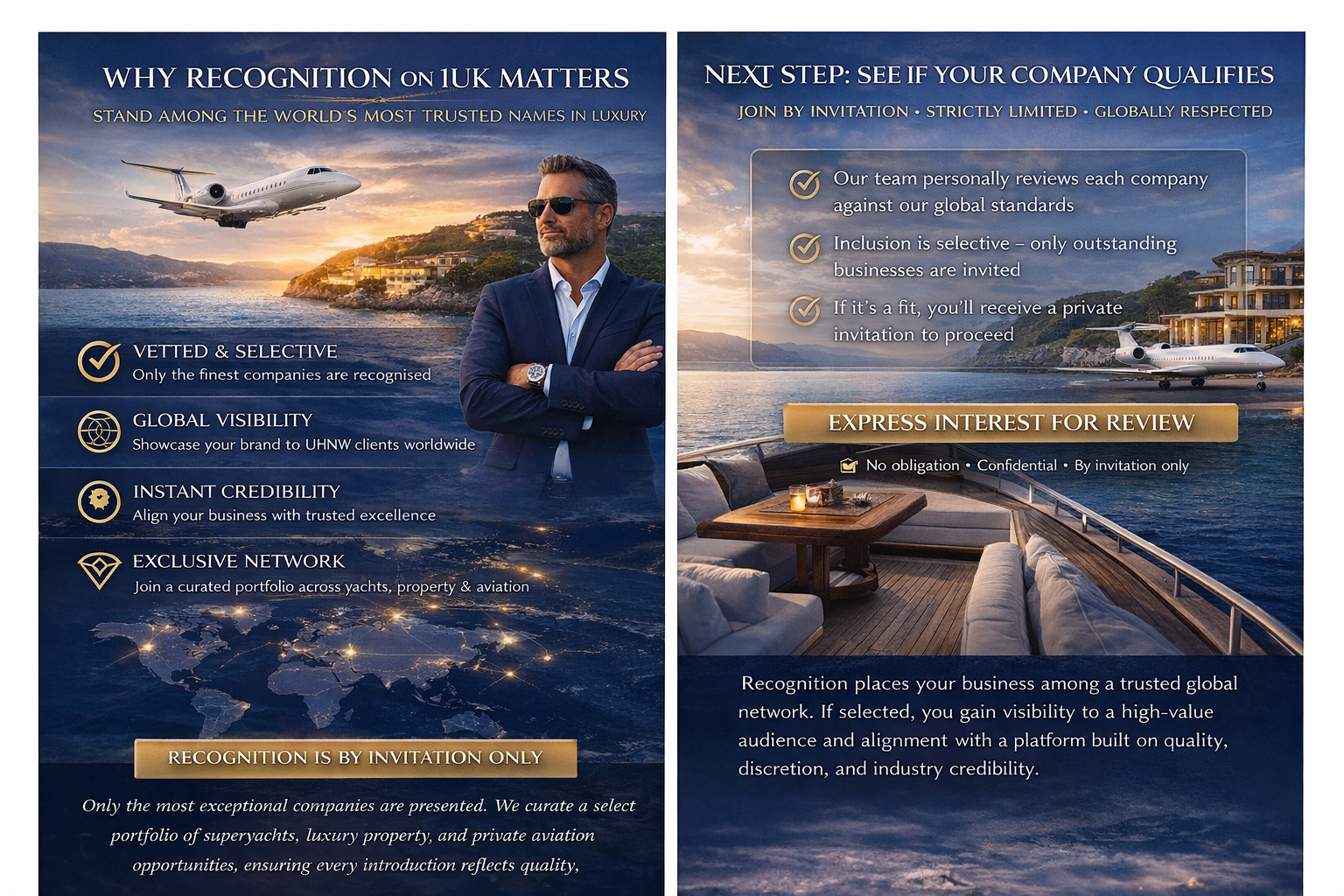
Recognition places your business among a trusted global network. If selected, you gain visibility to a high-value audience and alignment with a platform built on quality, discretion, and industry credibility.