
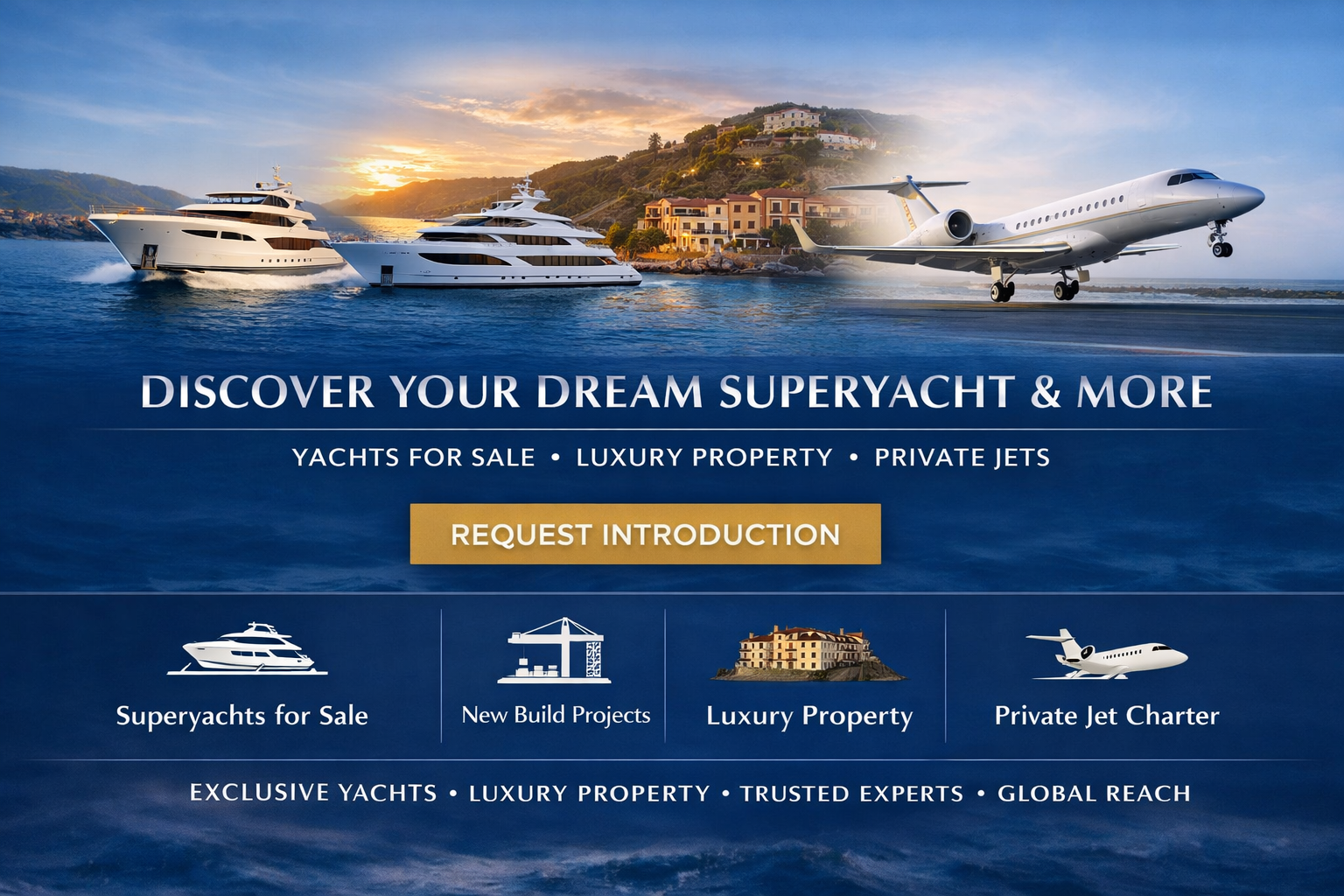
Explore a curated world of exceptional assets, from superyachts for sale and charter to luxury property and private jets. Whether you are looking to acquire, invest, or experience, we connect you with trusted opportunities and industry-leading expertise tailored to your requirements.
Superyacht Introduction
Superyachts represent the highest level of private luxury travel on the water. These vessels combine advanced engineering, exceptional design and world-class hospitality to create a unique environment where owners and guests can explore the world in complete privacy and comfort.
While the term “yacht” has historically referred to many types of leisure vessels, the modern superyacht has evolved into a highly specialised category of luxury asset. These vessels are typically professionally crewed, built by leading shipyards and equipped with sophisticated technology that allows them to travel across oceans while delivering an exceptional onboard experience.
In our view, superyachts are not simply luxury boats. They are floating private estates capable of travelling between the most desirable destinations in the world.
What defines a superyacht
Although definitions vary slightly within the industry, yachts above 24 metres (approximately 80 feet) are generally considered to fall within the superyacht category. Many of the world’s most recognisable yachts extend well beyond 50 metres and some exceed 100 metres in length.
What truly distinguishes a superyacht is not only its size but also the level of design, craftsmanship and operational complexity involved in its construction and management.
These vessels are typically built by specialised shipyards that focus exclusively on luxury yacht construction.
Luxury design and onboard lifestyle
The interior of a superyacht is usually designed by internationally recognised designers who create bespoke living environments tailored to the owner’s preferences.
Interior spaces often include spacious suites, formal dining rooms, lounges, cinema rooms, beach clubs and wellness areas. Outdoor spaces may feature swimming pools, sun decks, bars and entertainment areas.
Every aspect of the design is intended to create an atmosphere comparable to the finest luxury hotels, while maintaining the privacy and exclusivity of a private residence.
Professional crew and hospitality
Unlike smaller leisure boats, superyachts are operated by a professional crew responsible for both navigation and guest service.
The crew typically includes a captain, engineers, chefs, deckhands and hospitality staff who ensure that the yacht operates safely and that guests enjoy a seamless onboard experience.
The size of the crew varies depending on the yacht. Larger yachts may employ several dozen crew members across multiple departments.
This professional service is one of the defining characteristics of the superyacht lifestyle.
Global cruising destinations
Superyachts travel between some of the most desirable coastal destinations in the world. The Mediterranean remains the centre of the global yachting season during the summer months, while the Caribbean is popular during the winter.
Other regions such as Northern Europe, Southeast Asia and the South Pacific are also attracting increasing attention from yacht owners seeking unique cruising experiences.
Many yachts spend the year moving between different regions depending on the season.
Building a superyacht
Constructing a superyacht is an extraordinarily complex process that can take several years from concept to completion. Shipyards collaborate with naval architects, engineers and designers to create vessels that combine performance, safety and luxury.
Each yacht is typically customised to the owner’s requirements, meaning no two vessels are exactly the same.
The world’s most respected yacht builders are known for producing vessels that become icons within the industry.
Buying a superyacht
Purchasing a superyacht can involve either commissioning a new build or acquiring an existing vessel through the brokerage market.
The purchase process usually involves specialist brokers, legal advisors and technical consultants who help guide buyers through the various stages of acquisition.
Those considering ownership may wish to explore our detailed guide on Buying a Superyacht which explains the process in greater depth.
Operating and maintaining a yacht
Operating a superyacht requires ongoing management and maintenance. Owners often appoint professional yacht management companies to oversee crew recruitment, technical maintenance and regulatory compliance.
Annual operating costs typically include crew salaries, fuel, marina fees, insurance and maintenance.
Understanding these responsibilities is an important part of the ownership journey, which is explored further in our Superyacht Ownership Guide.
The charter market
Many superyachts are also made available for charter, allowing guests to experience the luxury of these vessels for short periods.
The charter market has grown significantly in recent years as more travellers seek private and flexible alternatives to traditional luxury holidays.
Chartering a yacht provides access to the superyacht lifestyle without the long-term commitment of ownership.
For those interested in this experience, our Superyacht Charter Guide explains how the process works.
The culture of superyachting
Over time, superyachts have developed their own global culture centred around major cruising destinations, prestigious yacht shows and an international community of owners, crew and industry professionals.
Events such as the Monaco Yacht Show bring together shipyards, designers, brokers and owners to showcase the latest innovations and developments in the sector.
This community continues to drive innovation across design, technology and sustainability.
Final thoughts
Superyachts represent one of the most extraordinary forms of luxury travel available today. They combine engineering excellence, elegant design and personalised service in a way that few other experiences can match.
For those who enter the world of superyachting, the possibilities are almost limitless — from exploring remote islands to hosting unforgettable events in some of the most beautiful locations on earth.
As the industry continues to evolve, superyachts will remain at the forefront of innovation, luxury and global exploration.


Recognition is not requested — it is earned. We identify and present exceptional companies operating at the highest level across superyachts, property, and private aviation. If your business meets the standard, inclusion places you alongside a trusted, carefully curated network recognised by a global audience.
Learn More..
Superyachts for Charter Guide | Luxury Charter Explained
Luxury Property for Sale in Spain | Investment & Lifestyle Guide
Superyachts for Sale Guide | Ownership, Costs & New Build Options
Superyacht Companies | Builders, Brokers & Superyachts for Sale
What Is Included on a Superyacht | Features, Amenities & Value
Average Cost of Owning a Superyacht | Running Costs & Value
Yacht vs Superyacht | Key Differences & Buying Guide
Motor Yachts vs Sailing Yachts | Key Differences & Buying Guide
Recognised Companies- Private Jets
Recognised Companies - Luxury Real Estate
Explore..
Luxury Property for Sale in Spain | Investment & Lifestyle Guide
How Long Does It Take to Build a Superyacht | New Build Timeline
How Many Crew Are Needed to Operate a Superyacht | Crew Guide
How Much Does It Cost to Build a Superyacht | New Build Pricing Guide
How Much Does It Cost to Charter a Superyacht | Charter Pricing Guide
How to Charter a Superyacht | Step-by-Step Charter Guide
Contact Introductions | Superyachts for Sale, Charter & Luxury Assets
Do Superyachts Make Money Through Charter | Investment & Returns Guide
Recognised Shipyards
Recognised Superyacht Charter Companies

Only the most exceptional companies are presented. We curate a select portfolio of superyachts, luxury property, and private aviation opportunities, ensuring every introduction reflects quality, credibility, and global appeal.
Recognition places your business among a trusted global network. If selected, you gain visibility to a high-value audience and alignment with a platform built on quality, discretion, and industry credibility.